Loi Littoral:
building by the lake.
Lac du Bourget is the largest natural lake in France — and it far exceeds the threshold that automatically triggers the Loi Littoral for lakeside communes. In Chautagne, three communes are affected: Chindrieux, Conjux and Saint-Pierre-de-Curtille. Here is what that changes in practice.
Why the Loi Littoral applies to a mountain lake
Many owners discover the Loi Littoral when they are refused a permit. Yet the mechanism is automatic: article L121-1 of the Planning Code refers to article L321-2 of the Environment Code, which classes as coastal communes those on the shores of inland bodies of water of more than 1,000 hectares.
Lac du Bourget far exceeds this threshold. Being subject to the law is therefore not the result of any local decision or discretionary list: it follows solely from lying on the shore. No commune can opt out, and no elected official can exempt you.
In Chautagne, the three communes on the lakeshore are Chindrieux, Conjux and Saint-Pierre-de-Curtille. The other five — Serrières-en-Chautagne, Ruffieux, Chanaz, Motz and Vions — are not subject to this regime, which does not mean they are free of constraints: the flood risk prevention plan (PPRi) and environmental zoning apply there.
The 100-metre strip: a prohibition, and one decisive exception
The Chautagne PLUi regulations incorporate article L121-16 of the Planning Code: outside built-up areas, buildings or installations are prohibited within a 100-metre lakeshore strip. The only exemptions are buildings needed for public services or for economic activities requiring immediate proximity to the water.
But the regulations provide for an exception that changes everything for an owner: existing dwellings with a floor area of 50 m² or more may be repaired, rehabilitated and refurbished — without any change in volume. The rehabilitation of existing outbuildings is also permitted, under the same conditions.
The consequence deserves to be stated plainly: on a large part of the lakeshore of these three communes, renovating the existing building is the only legal option. That is not a bad thing. A property located in a strip where nobody will ever build again, properly rehabilitated, retains a value that nothing will compete with.
Areas close to the shore: the other, often overlooked perimeter
Beyond the 100-metre strip, the Loi Littoral defines a second perimeter: areas close to the shore. The PLUi regulations refer here to article L121-13 of the Planning Code: refurbishing existing buildings remains permitted provided it does not constitute an extension of urban development.
Above all: outside built-up zones, new buildings are only allowed there in continuity with existing towns and villages, after consultation of the departmental commission for nature, landscapes and sites (CDNPS). An isolated house in the middle of a meadow, even outside the 100 metres, therefore comes up against this continuity principle.
It is this second perimeter that most often comes as a surprise, because it is less well known than the 100-metre strip and its boundaries cannot be guessed from the road.
The only honest advice: have the zoning checked first
Let us be clear, because this is the point on which we refuse to bluff: nobody can tell you from memory whether your plot lies within the 100-metre strip or in the areas close to the shore. These perimeters are identified on the PLUi zoning plan and defined in the explanatory report. They are read, not estimated.
Be wary of anyone — estate agent, company, neighbour — who tells you otherwise without having opened the plan. A project designed and then rejected costs infinitely more than a check carried out at the right time.
It is the first thing we do, free of charge, before committing you to a study: consulting the zoning, the applicable regulations and the easements. Only then do we talk about the project — and we tell you frankly whether what you have in mind is possible, or whether it needs to be redirected towards rehabilitation.
Our projects around the lake
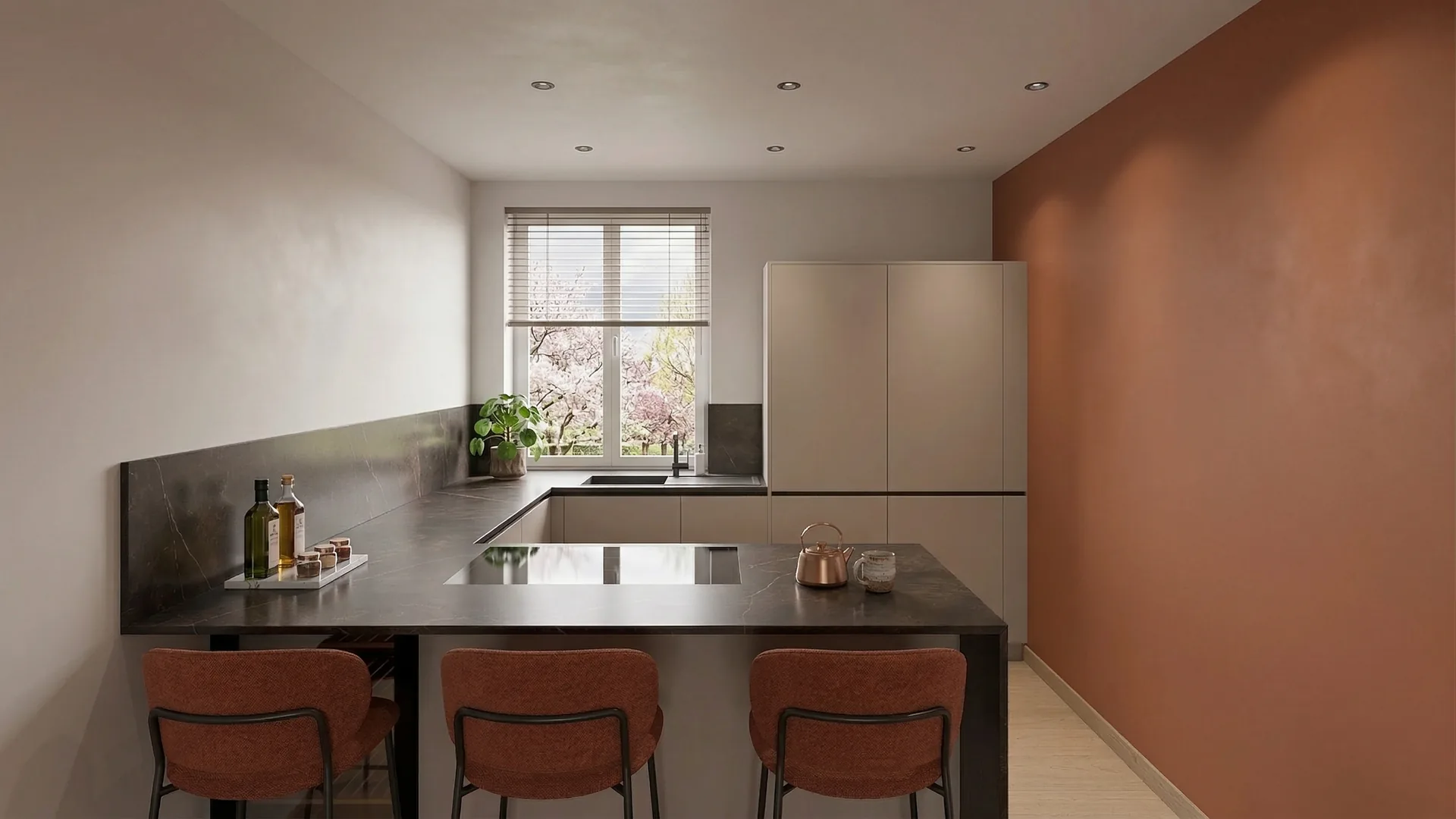
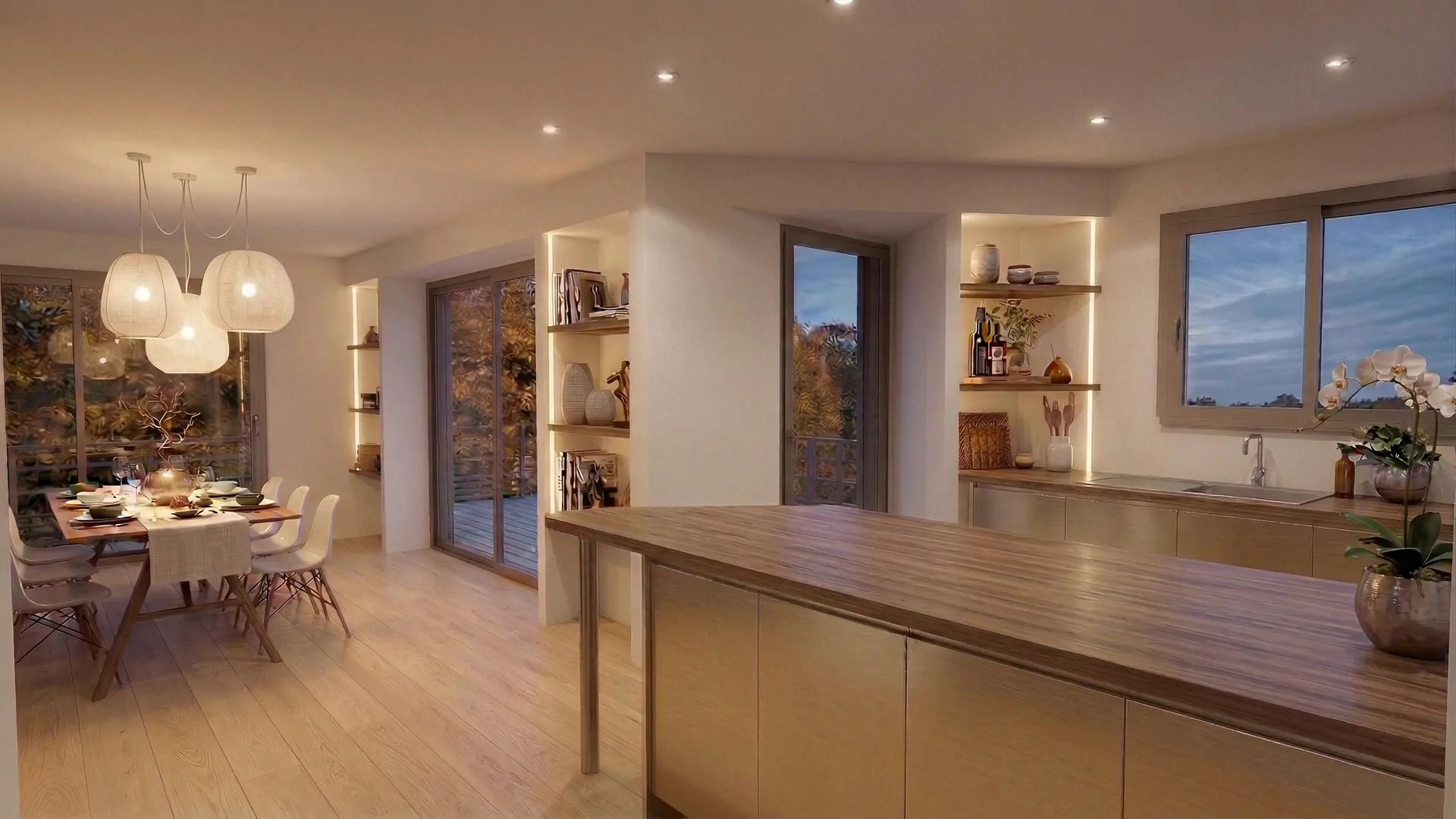
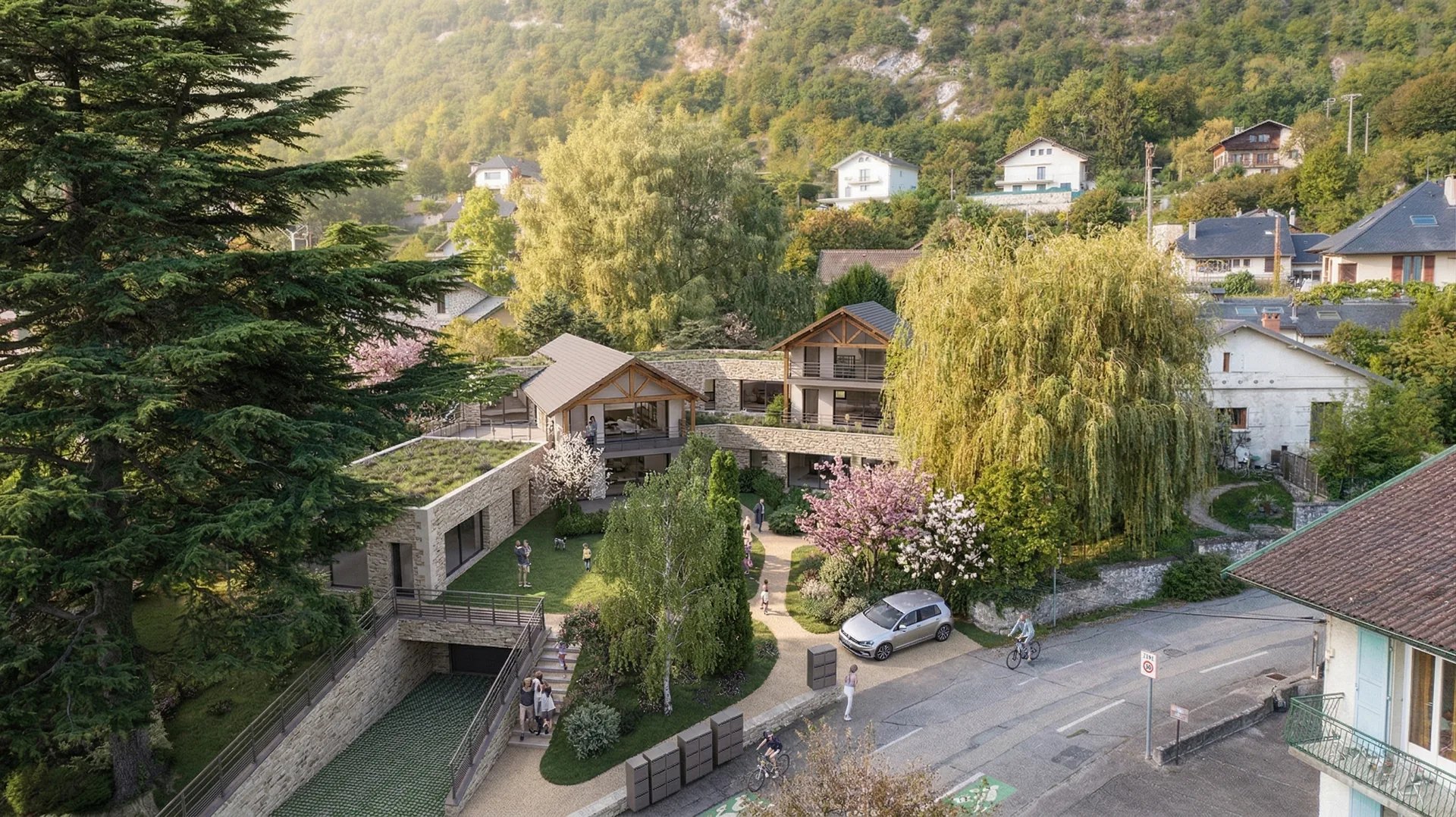
All projects →Our office is in Aix-les-Bains, around twenty minutes from Chautagne. Here are some recent projects around the lake, including a renovation in Chindrieux.
Our work in lakeshore areas
A strict regulatory framework does not prevent a fine project — it means designing it within the rules.
Checking the lakeshore zoning
Consulting the zoning plan, regulations and easements before any study: the 100 m strip, areas close to the shore, built-up zones.
Rehabilitating existing buildings
Repair, rehabilitation and refurbishment of a dwelling of at least 50 m², without any change in volume: the core of what remains possible in the lakeshore strip.
Major renovation & restructuring
Complete interior reconfiguration, new services, insulation, windows and doors: gaining comfort and value within the same volume.
Preparing the planning application
Prior declaration (déclaration préalable) or building permit, drawings, landscape integration statement, follow-up of the application and required opinions.
Rehabilitating outbuildings
Existing outbuildings can be rehabilitated without any change in volume: an often under-used margin on lakeshore plots.
Project management & turnkey
A single point of contact, from the regulatory assessment to handover — useful when managing a lakeside property remotely.
Loi Littoral: the communes affected in Chautagne
Chindrieux, Conjux and Saint-Pierre-de-Curtille lie on the lakeshore. We work in all eight communes.
Frequently asked questions · Loi Littoral in Chautagne
Let's see what is
really possible.
Free, no-obligation first meeting: we check the lakeshore zoning of your plot before talking about works.