Building in a
flood zone.
Chautagne is a wetland plain bordered by the Rhône and Lac du Bourget. The Plaine de Chautagne PPRi, approved in 2015, covers seven of the eight municipalities and accounts for flooding from both. It does not block every project — but it dictates foundations, levels and budget.
A PPRi that accounts for the Rhône AND the lake
The Plaine de Chautagne PPRi was approved by prefectoral order on 28 August 2015. It revises an older document that did not account for flooding from the lake itself — a major gap in a plain where the two phenomena combine.
Seven municipalities are covered: Motz, Serrières-en-Chautagne, Ruffieux, Vions, Chanaz, Conjux and Chindrieux. Saint-Pierre-de-Curtille is not included. The risk is not theoretical: Rhône floods have already cut off and flooded hamlets in Chautagne.
The area is in fact an alluvial plain with some 1,800 hectares of wetland, historically drained and embanked. Hydroelectric development of the Rhône has changed the flood pattern, but has not removed the risk: it has shifted and contained it.
What the PPRi changes in practice on a building project
The most decisive consequence is technical and often misunderstood: in areas covered by the PPRi, building height is measured from the reference level set in the risk document, not from natural ground level. A project drawn without this data is a project that will have to be redrawn.
This has knock-on effects: the lowest floor level, whether there is a crawl space and how high it is, the type of foundations, where plant rooms go and the choice of materials on lower levels. On a renovation, it can also determine whether a habitable room can be created on the ground floor.
Other tools also come into play, which we check case by case: hazard maps, R111-3 maps and Z-indexing plans (PIZ). The PLUi regulations, for example, detail a PIZ in Vions, with no-build zones due to rockfall and areas where buildings are “limited to their existing footprint”.
Flood zone does not mean no-build zone
This is the most common misunderstanding. A PPRi does not freeze an area: it classifies zones according to hazard intensity and sets out, for each, what is prohibited, what is permitted subject to conditions, and what is unrestricted. Many plots in Chautagne remain buildable subject to specific requirements.
What costs money is not the constraint: it is discovering it late. A mandatory crawl space, a floor level raised by forty centimetres or adapted foundations can be costed without drama if they are built in from the initial sketch. Discovered after the permit application, they blow the budget or kill the project.
Our in-house design office reads the PPRi regulations applicable to your plot before costing. That is what allows us to honour a commitment on price and timescale, including as general contractor.
Renovating an existing property in a flood zone
For the vast majority of our clients in Chautagne, the question is not about a new build but an existing property: a village house, a farmhouse, a waterside second home. Here the PPRi works differently: it mainly governs extensions, the creation of habitable floor area on lower levels and certain alterations.
An interior renovation, a roof overhaul or a thermal upgrade generally raises no difficulty. On the other hand, turning a flood-prone ground floor into a bedroom, or adding a single-storey extension, often runs up against the regulations.
We tell you what is possible before you become attached to a plan. And when the regulations close one door, they almost always open another: building upwards rather than outwards, converting the loft, reorganising the existing levels.
Our projects around the lake
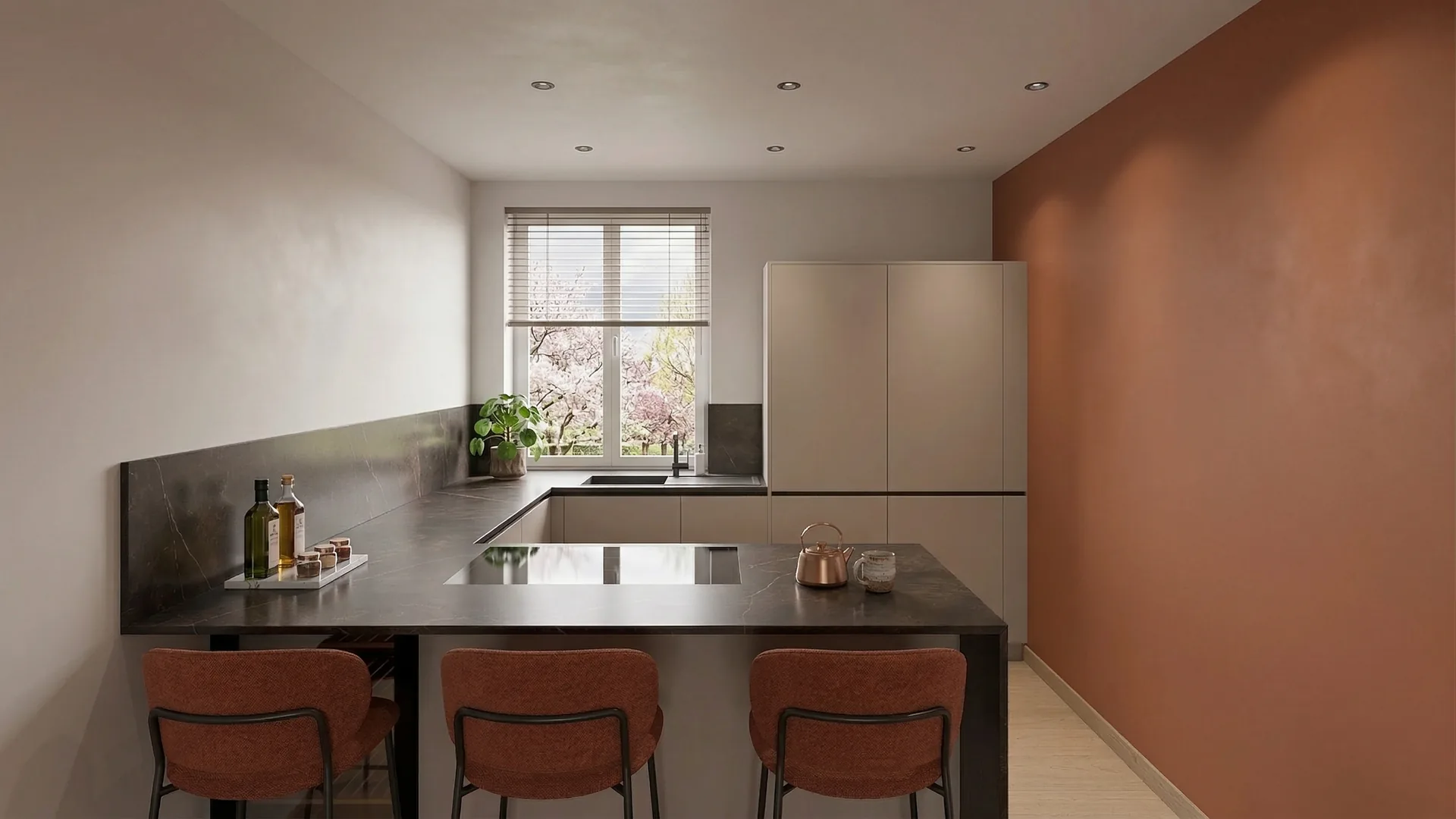
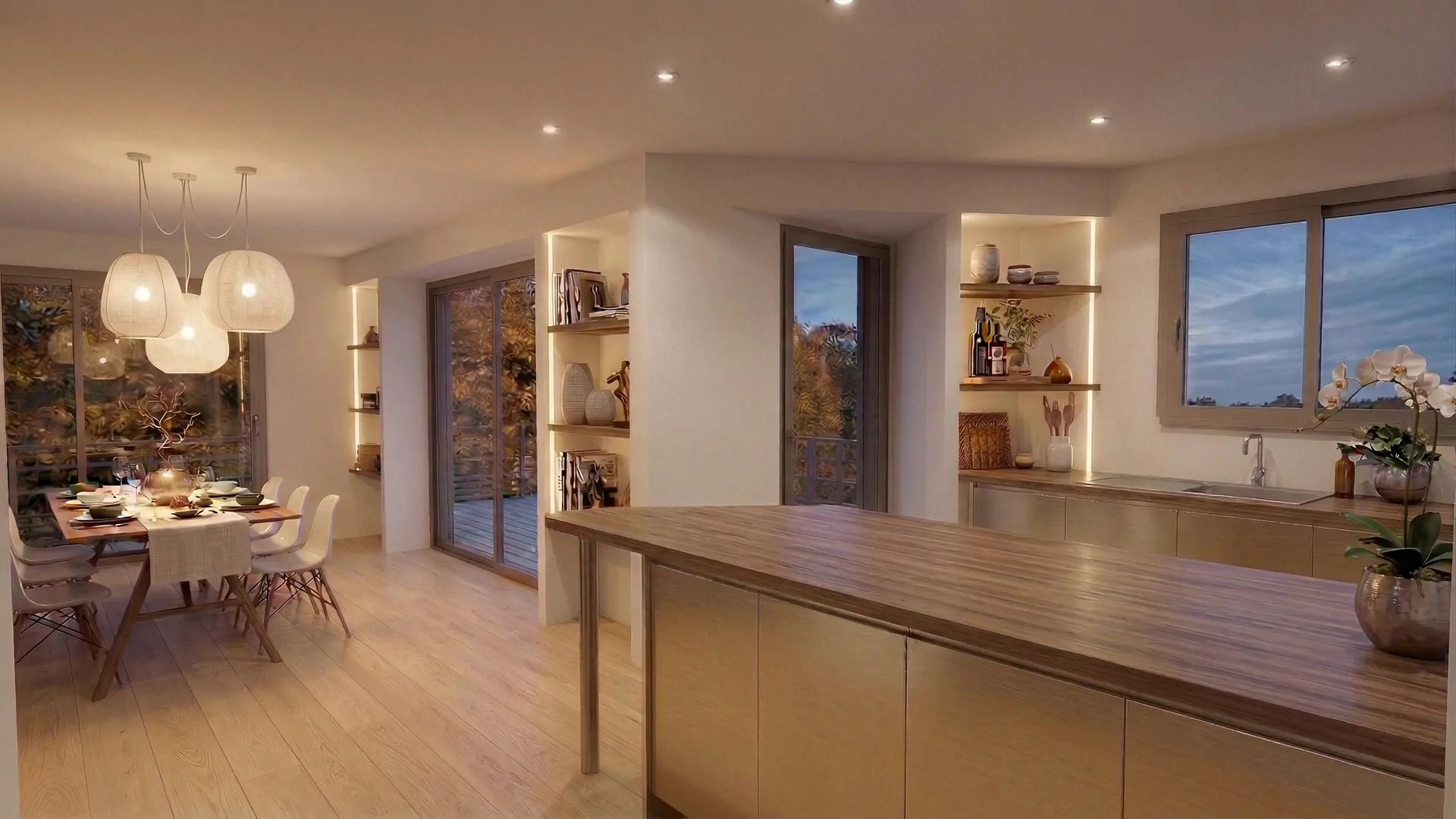
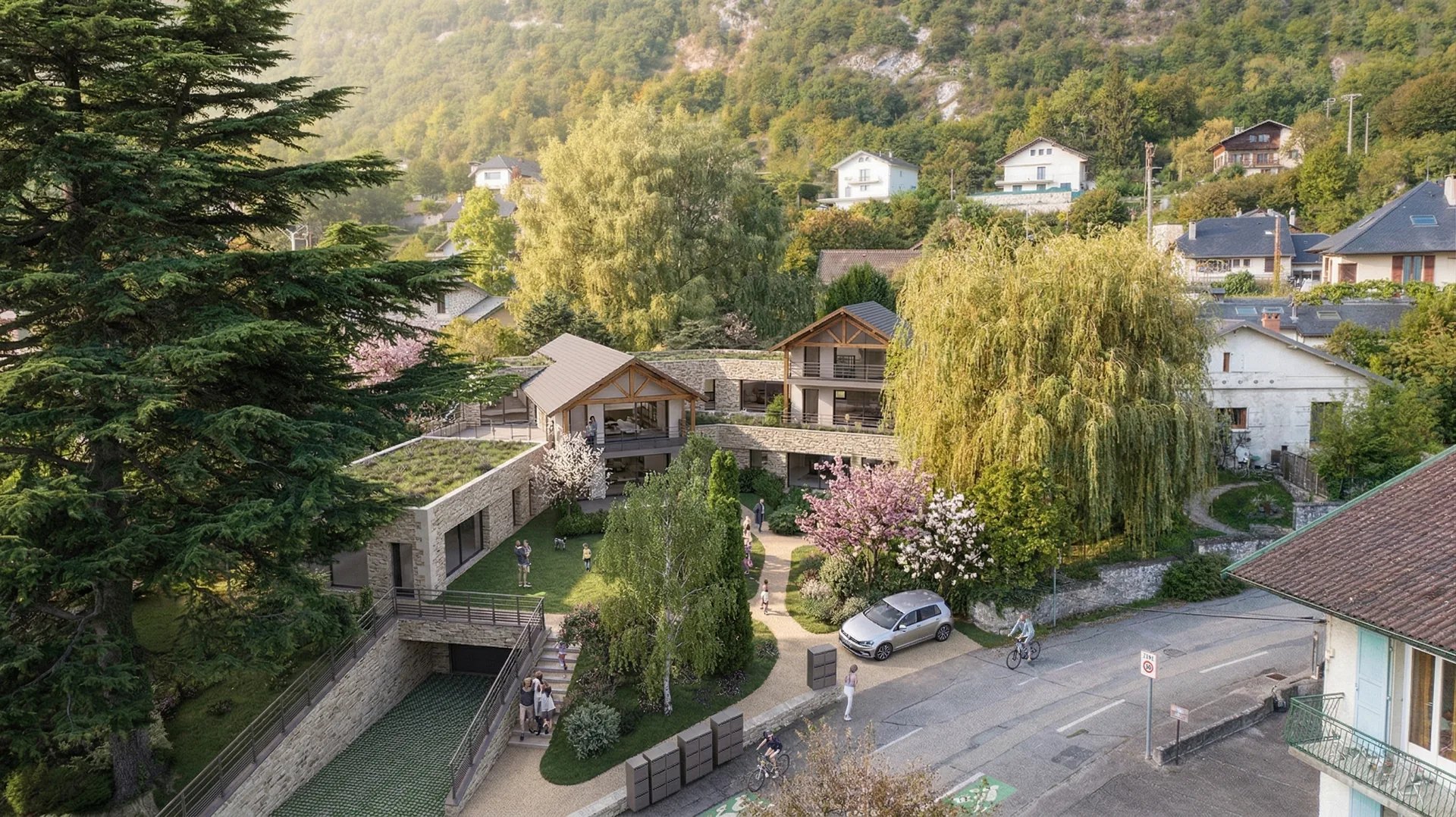
All projects →Our office is in Aix-les-Bains, around twenty minutes from Chautagne. Here are some recent projects around the lake, including a renovation in Chindrieux.
Our work in risk areas
Reading the regulations before drawing — that is the whole difference between a project that gets approved and a project that costs you.
Reading the applicable PPRi (flood risk prevention plan)
Identifying your plot's zoning, the reference flood level and the construction requirements, before any costing.
Design adapted to the reference level
Floor level, crawl space, foundations and the siting of plant rooms set according to the PPRi reference level.
Renovating the existing building
Reconfiguration, insulation, windows and doors, and refurbishment: most improvement works remain possible in a flood zone.
Adding a storey & loft conversions
When ground-level extension is restricted, gaining floor space upwards is often the best technical and regulatory answer.
Preparing the planning application
Building permit or prior declaration (déclaration préalable) including the documents required by the risk regulations, and follow-up of the review process.
Project management & turnkey
Full coordination, commitment on price and timescale — all the more useful when technical constraints are significant.
PPRi: the municipalities covered in Chautagne
Seven municipalities out of eight are affected. Saint-Pierre-de-Curtille is not covered by this PPRi.
Frequently asked questions · Flood zones in Chautagne
Let's look at the regulations
before the plans.
Free first meeting with no obligation: we read the PPRi applicable to your plot before any costing.