Re-roofing
your house.
Porous tiles, leaks after every storm, battens giving way: one day, repairs are no longer enough and the roof covering has to be redone. Here is how re-roofing works, what makes up the quote, the formalities to plan for and the grants it may qualify for.
Re-roofing, repair, maintenance: what are we talking about?
We speak of re-roofing when the roof covering is removed and redone: tiles or slates, but also, most often, the battens that carry them, the underlay membrane and the metal flashings. It is a major job, distinct from maintenance (cleaning, moss removal, replacing a few broken tiles) and from spot repairs (fixing a leak, a flashing, a ridge).
The line is not always obvious, and it is the first honest question to ask. A few hail-broken tiles on a sound roof do not justify redoing everything. Conversely, tiles crumbling across every slope, leaks in several places, rotten battens or a wavy roof surface are signs of a roof at the end of its life: repairing it only postpones the inevitable while paying several times over.
One last clue never lies: what is happening under the covering. Damp marks on the timbers, a musty smell in the loft or a sagging purlin show that water is already reaching the roof structure. At that point, the question is no longer just the covering but the condition of the structure that carries it — a subject we cover in detail in our guide on repairing and reinforcing a traditional roof structure.
Why decide in autumn
In Savoie and Haute-Savoie, roofs endure snow, frost and repeated thaws. A defect spotted in October becomes a leak in January. Autumn is therefore the right time to have the roof covering inspected and make weathertight whatever needs it before winter.
Full re-roofing, on the other hand, is scheduled outside the snow and frost period. Deciding now leaves time to do things in the right order: compare quotes on the same scope, file the prior declaration if needed (one month's review in general, two in a protected area) and book a slot. Savoie companies are in particularly high demand between April and October: spring schedules fill up during the winter.
The stages of re-roofing
1. The diagnosis. We go up to inspect the roof covering, but also the loft: condition of the timbers, water marks, ventilation, existing insulation. This diagnosis tells whether it is a simple re-roofing or a roof structure job.
2. The formalities. Prior declaration if the external appearance changes, asbestos survey if the building is old (see below), whether or not to insulate. Everything is decided before starting, not during.
3. Scaffolding and site protection. It keeps the teams safe and protects the house. How complex it is depends on the height, the slope of the ground and access.
4. Removal and disposal of the old roof covering, the battens and, where applicable, the old underlay membrane.
5. Inspection of the exposed roof structure. This is the moment of truth: once the covering is removed, the real condition of the rafters and purlins can be seen. Damaged timbers are replaced or reinforced before going any further.
6. The underlay membrane, counter-battens and battens, which provide ventilation under the tiles and a second line of protection against water and powder snow.
7. The new roof covering, then the special details: ridge, verges, eaves, valleys, around chimneys and roof windows, and finally the metalwork (gutters, downpipes, flashings).
8. Handover. It is formalised by a signed handover report. It is a legal step in its own right: the 10-year structural guarantee runs from the day after it is signed.
What determines the cost of re-roofing
Looking up a re-roofing price per square metre gives huge differences from one website to another. The reason is simple: these figures almost never cover the same items. Rather than a figure that would not match your roof, here is what actually makes up a quote, and what makes it vary.
The items in the quote
A complete quote separates at least the scaffolding, removal and disposal, any roof structure repairs, the underlay membrane and battens, the new roof covering, the special details and the metalwork. If insulation is done at the same time, it appears on separate lines — which is also necessary to apply the correct VAT rate to each part.
What makes the budget vary
The roofing material is the first source of difference: interlocking tiles, plain tiles, slate or steel sheeting do not have the same price, the same laying time or the same weight on the roof structure. Changing material also means checking that the structure can carry it.
The shape of the roof comes next. A two-slope roof with no openings is quick to handle. Add more valleys, hips, dormers, chiens-assis and chimneys, and the time spent on special details can exceed that spent on the plain areas.
The condition of the roof structure, finally, is the main source of uncertainty. Replacing a few rafters or repairing a damaged purlin changes the nature of the job. That is why a serious quote relies on a visit to the loft, and states clearly how discoveries made during removal will be handled.
When you compare two quotes, start by checking what each line covers. A cheaper quote that leaves out the scaffolding, the metalwork or waste disposal is no longer cheaper once those lines are put back in.
Re-roofing without insulating: the mistake you pay for twice
The roof accounts for 25 to 30% of a house's heat loss, more than the walls. Yet re-roofing is the only time the scaffolding is in place and the covering removed. Redoing the roof covering and then wanting to insulate a few years later means paying a large share of those costs again.
There are three situations. If the loft is unconverted, insulation is often done from the inside, by blowing insulation onto the floor — a solution that re-roofing does not make necessary but that it makes sense to schedule at the same time (see our guide on insulating unconverted lofts). If the loft is converted and you do not want to touch the interior finishes, re-roofing makes it possible to insulate from the outside, above the rafters, without losing a centimetre of ceiling height. Finally, if you are thinking of converting the loft, now is the time to decide, because insulating the roof slopes and creating roof windows are designed together with the covering.
For roof slopes, energy savings certificates require a thermal resistance of at least 6 m².K/W (BAR-EN-101 sheet); for an unconverted loft floor, at least 7. These thresholds set the thickness to plan for if you wish to claim the grants.
Planning permission and asbestos
The prior declaration. Roofing is among the works that change the external appearance of a building. As soon as the re-roofing changes the material, the colour or the pitch, or creates roof windows, a prior declaration (déclaration préalable) must be filed at the town hall. The review period is one month in general, and usually two months in a protected area, where the opinion of the ABF heritage architect is required. Once granted, the authorisation is valid for three years. Even for a like-for-like re-roofing, the safest course is to check with the town hall before signing: the local plan (PLU) may impose a colour, a material or a pitch.
The asbestos survey. For a building constructed before 1 July 1997, the regulations (order of 16 July 2019) require the client to have the materials affected by the work checked for asbestos before starting, unless the information already available makes this possible. On a roof, corrugated fibre-cement sheets, fibre-cement slates and some soffits are the first materials to check. This survey determines the removal method and its cost: better to know it before the quote than after.
VAT, grants and certification
VAT. In a dwelling completed more than two years ago, improvement and maintenance work is subject to the reduced rate of 10%: this is in principle the case for re-roofing. Energy renovation work, including thermal insulation, is subject to the 5.5% rate. Since 1 March 2025, there is no longer a certificate to fill in: the client certifies that the conditions are met through a statement written on the quote or the invoice.
Grants. Let us be clear: roof covering alone is not an energy renovation measure. It is the insulation work carried out during the re-roofing that qualifies for grants, provided you use an RGE-certified company and meet the technical criteria:
— energy savings certificates (CEE), via the BAR-EN-101 sheet for insulating lofts and roof slopes;
— the zero-interest eco-loan, which covers roof insulation: up to €15,000 for a single measure, €25,000 for two, €30,000 for three or more, in a dwelling built more than two years ago;
— MaPrimeRénov', which in 2026 no longer funds insulation as a stand-alone measure, but only within the supported pathway, which requires at least two insulation measures. Our page MaPrimeRénov' 2026 in Savoie explains the pathways.
Our RGE CertiRénov certification (no. CR-2026-73-0095) is what gives access to these schemes. Their scales change often: we check the conditions that apply at the time of your project, and we invite you to cross-check them on france-renov.gouv.fr.
The guarantee. Re-roofing is covered by the 10-year structural guarantee (garantie décennale): for ten years after handover, it covers defects that compromise the soundness of the structure or make it unfit for its purpose. Before work starts, ask for the company's 10-year insurance certificate.
Our projects around the lake
All projects →Our office is in Aix-les-Bains and we work across Savoie and Haute-Savoie. Here are some recent projects.
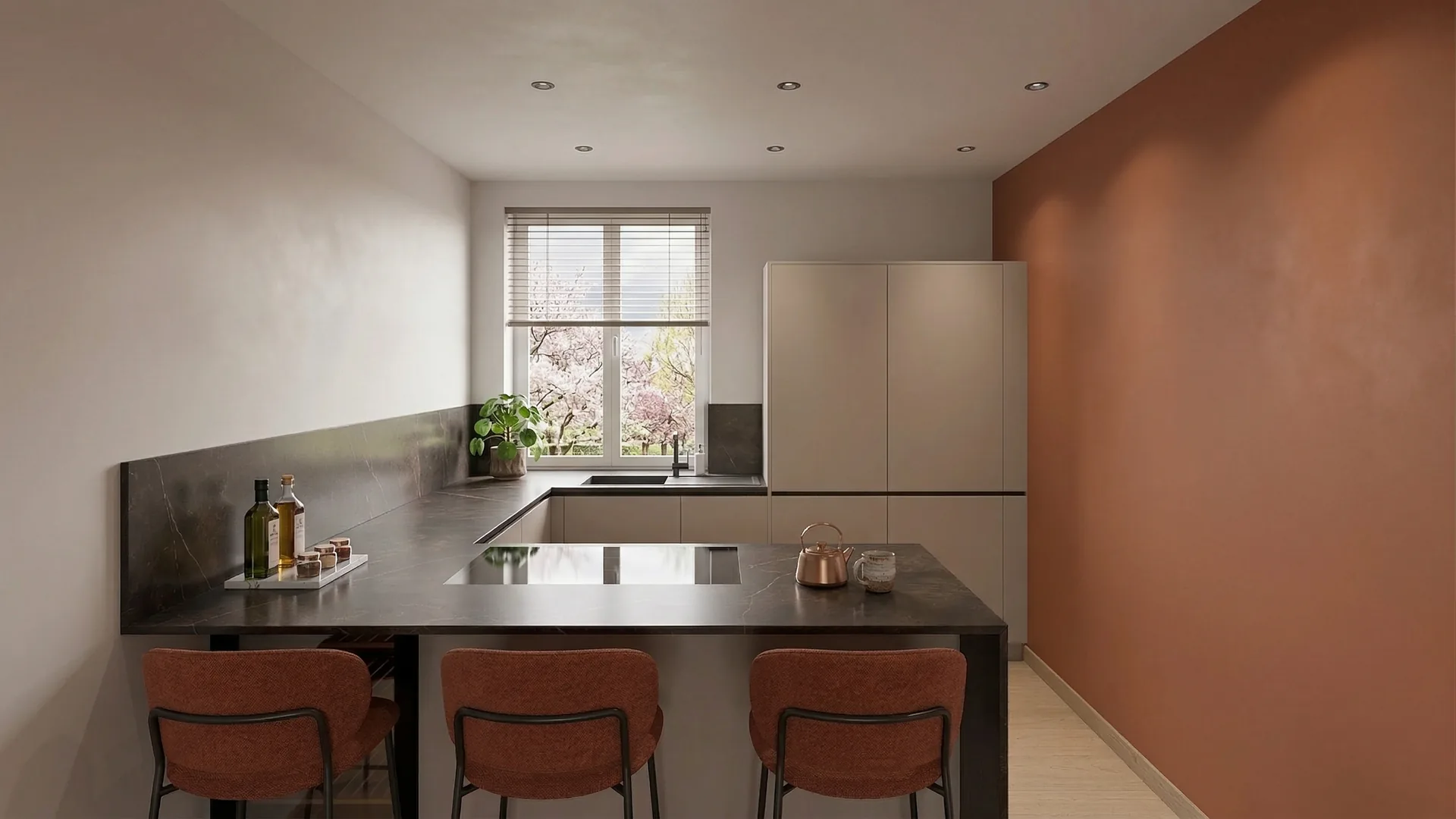
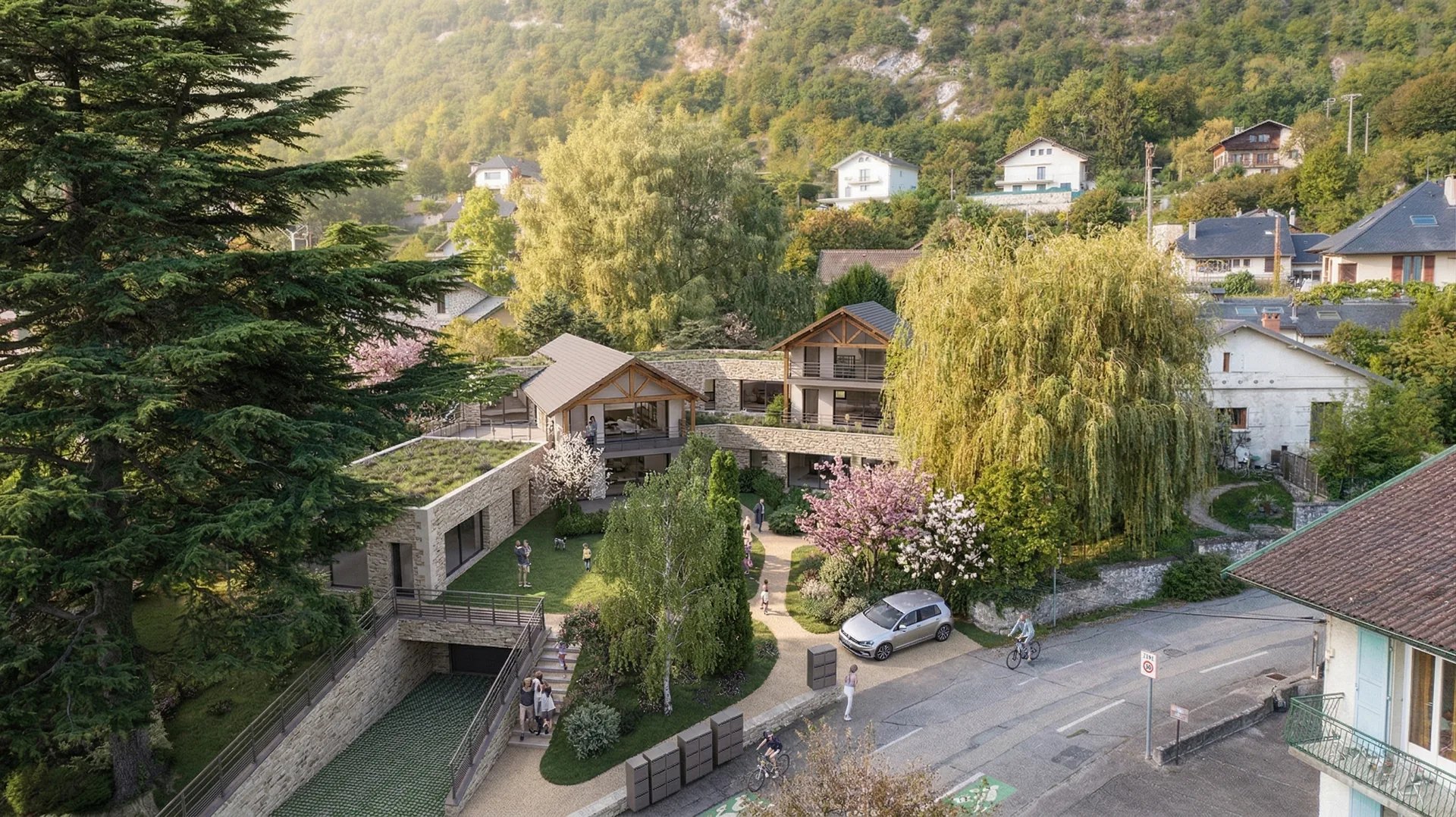
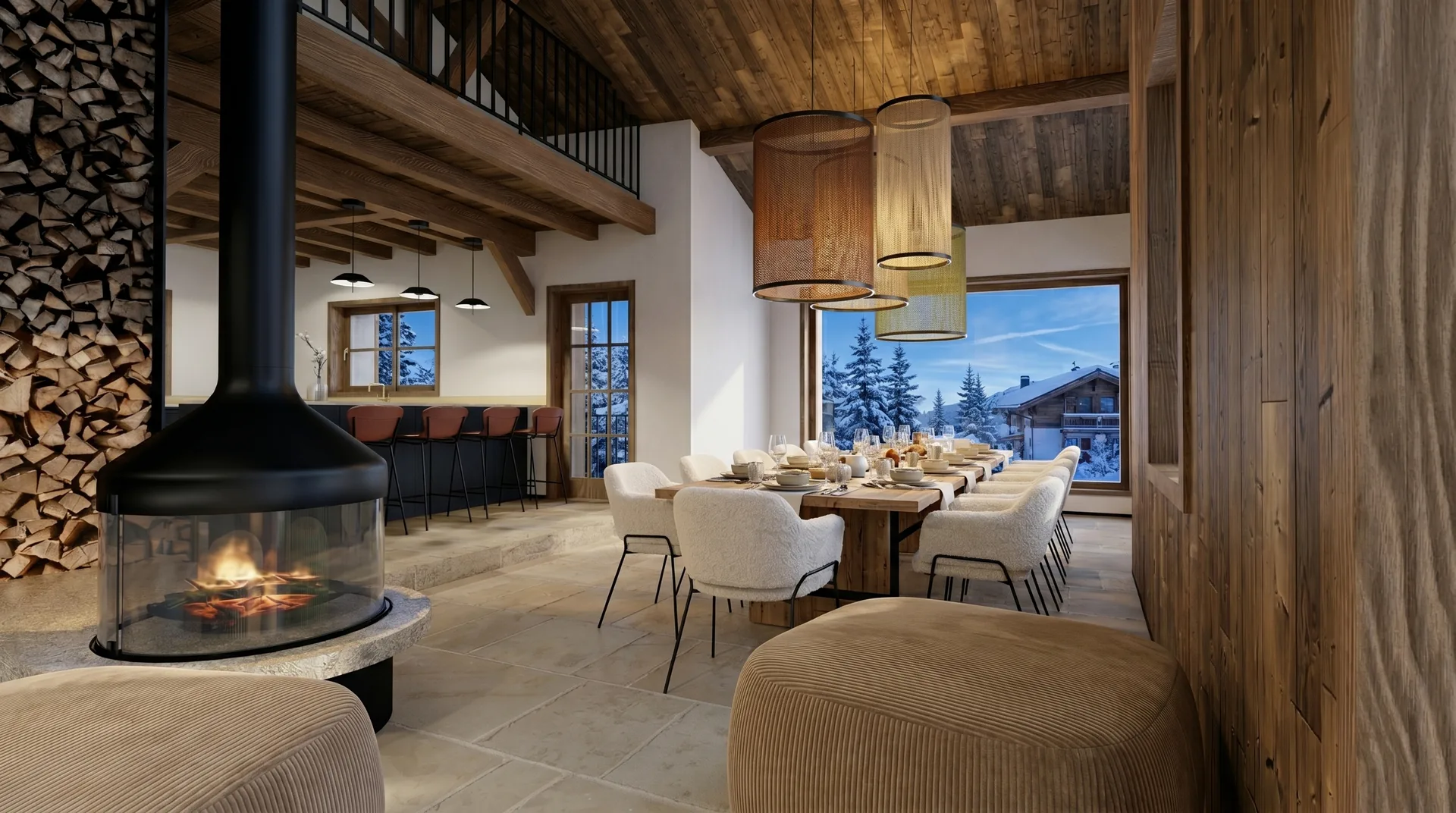
How we carry out re-roofing
Our own teams, a single point of contact, a detailed item-by-item quote — with no catch-all line.
Visit and survey
Roof covering, loft, roof structure, access: we go up and look before pricing. A roof price cannot be given over the phone.
Formalities
Prior declaration, local plan (PLU) or protected-area constraints, asbestos survey if the building warrants it.
Detailed quote
Scaffolding, removal, roof structure, underlay, roof covering, special details, metalwork and insulation priced separately.
Choice of insulation
From the inside or the outside, depending on your loft: we compare the solutions and their net cost, after grants.
Grant applications
CEE, eco-loan, reduced VAT and, if your project qualifies, the MaPrimeRénov' supported pathway.
Handover
Handover report, grant file documents and 10-year insurance certificate provided.
Find out more
- Traditional roof structures: repair and strengthening
- Insulating an unconverted loft: the guide
- Convertible attics: feasibility
- Chien assis: adding a dormer window
- Roof renovation in Aix-les-Bains
- Roof renovation in Annecy
- Roof renovation in Chambéry
- MaPrimeRénov' 2026 in Savoie
- Our energy renovation services
- Our RGE CertiRénov certification
- Request a free quote
Where we work
From our Aix-les-Bains office, across Savoie and Haute-Savoie.
Frequently asked questions · Re-roofing
A diagnosis before
winter.
Visit, diagnosis of the roof covering and structure, detailed quote: free and with no obligation. You will know what needs redoing, what it costs line by line, and what the grants cover.